How to find your main water shutoff valve and test it
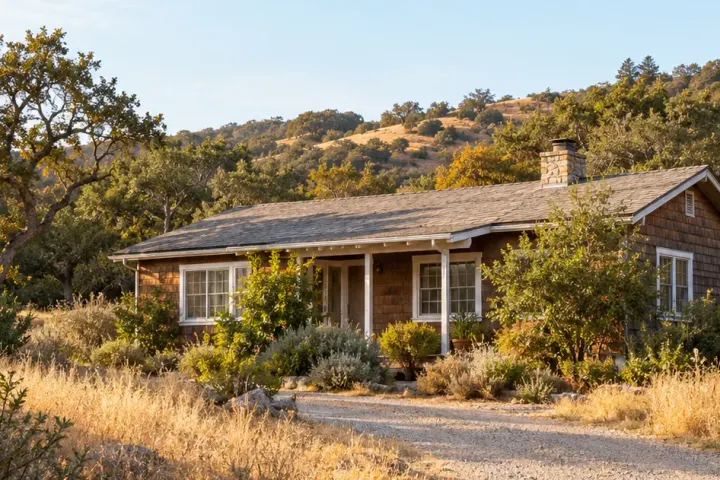
In many California houses the main water shutoff is outside, where the water line comes in from the street. Look on the front or side wall first, often just below a hose faucet, then in the garage or next to the water heater. Once you find it, test it and put a label on it, so nobody has to go looking while water runs across the floor.

The short version
- Your house valve usually sits where the water line enters the house, often under a hose faucet on the front or side wall, or in the garage.
- The meter box near the street can have 2 valves in it. Only the one on the house side of the meter is yours to turn.
- To test your valve, close it slowly, open an indoor faucet to check that the water stops, then open the valve back to where it was.
- If the valve is stuck, spins or leaks, leave it alone and call a plumber this week rather than during a leak.
Time: 15 minutes.
Which valve is the main shutoff?
The main shutoff is the valve on your side of the meter that stops water to the whole house. Most houses have several valves that can stop water, but each one stops a different amount of it. Here they are in order, from the street in:
- The utility's valve. It's in the meter box, on the street side of the meter. It belongs to the water district. Districts such as Calaveras County's don't allow customers to use it.
- The customer valve. Some houses have one in the meter box on the house side of the meter, or in a small box of its own nearby. LA County's waterworks districts describe it as a brass handle, often painted blue or stamped with an arrow.
- The house valve. Some districts call it the master shutoff. It's part of your own plumbing. It's usually where the water line enters the house.
- The fixture valves. There's one right behind each toilet, sink and appliance. The water heater has its own valve on its cold supply pipe.
California's plumbing code requires most of these. Section 606.2 of the 2025 California Plumbing Code puts a full shutoff valve on the house side of every water meter. It says that valve has to be accessible. The same section puts a valve on the cold water pipe into each water heater. Section 606.5 adds a valve right ahead of each appliance that uses water.
That's useful in a small leak. If a toilet or the pipe under one sink is leaking, close that fixture's valve first. The Lake Arrowhead Community Services District tells its customers to try that before they go to the main.
How to find the main shutoff, step by step
Start at the water meter. It's usually in a box in the ground at the front of the lot or in the sidewalk. The San Francisco Public Utilities Commission (SFPUC) says most main valves are in line with the meter. They're on the outside of the house or just inside the property.
Check whether the meter box has a customer valve. Look at the pipe on the house side of the meter for a handle. The Indian Wells Valley Water District says the valve closest to the street is the district's, for district use only. Ready.gov adds that the street valve is very hard to turn and needs a special tool. In San Francisco, the SFPUC asks customers to leave the meter to its own field staff, so skip the box there.
Look for a second small box. In Lake Arrowhead, the customer shutoff is usually in a separate box about 2 feet from the district's meter box.
Walk the line toward the house. The pipe runs underground from the meter to the house. Check the wall that faces the street first, then the side walls. Santa Clarita Valley Water says house valves are usually outside, often just below the hose faucet where the main line comes in.
Check the garage and the water heater. If the outside walls don't have a valve, look inside. The SFPUC lists the garage, the basement and a closet. The Lake Arrowhead district says the master valve is often near the water heater. Don't mistake the water heater's own valve for the main. The heater's valve only stops water going into the heater.
Ask if you still can't find it. Renters should ask the landlord. In San Francisco, the SFPUC offers a courtesy visit to help you find the valve (415-551-3000). Don't count on every district knowing, though. The Calaveras County Water District says it doesn't keep records of where your valve is, or whether you have one.
Tick each step as you go. of 6 done.
How to test the valve without breaking it
Test the valve on a calm day rather than during a leak, because old valves can fail when you turn them. Santa Clarita Valley Water warns that a valve may be stuck, keep spinning or even break off in your hand. You'd rather learn that with a plumber's number ready and nothing flooding.
Don't run this test if you live in a building with several units. The Indian Wells Valley district says you could shut off a neighbor's water.
Pick a quiet time. Tell everyone at home. Make sure the washing machine, the dishwasher and the sprinklers aren't running.
Work out which kind of valve you have. A gate valve has a round or oval handle like a small wheel. It closes clockwise and takes several turns. A ball valve has a straight lever. It closes with a quarter turn. It's off when the lever sits across the pipe.
Close it slowly. Santa Clarita Valley Water says ball valves must be closed and opened slowly, so you don't strain the pipes and fittings. Turn a gate valve until it stops. Don't push it past that point. If it won't turn at all, stop and go to the next section.
Open an indoor faucet. A little water comes out as the pipe empties. Then the flow should stop. Try a faucet at the far end of the house too. If water keeps running, the valve isn't closing all the way or it isn't the main.
Check the meter if you can reach it. Many meters have a leak indicator. LA County's districts describe theirs as a red sweep hand or a red triangle. It stays still when no water is going through the meter. With your house valve closed, it should stop moving. If it still turns, water is getting through somewhere, either past the valve or through a line that branches off before it.
Open it again slowly. Turn the handle back to where you found it. Then close the faucet once the water runs smoothly.
Label it and show people. Hang a tag on the valve and show everyone at home how to turn it. Ready.gov and the Indian Wells Valley district both say to tag it. Santa Clarita Valley Water says to practice with your household.
Tick each step as you go. of 7 done.
What if the valve is stuck, spins or leaks?
Leave it alone and call a plumber. The Indian Wells Valley district says not to force a valve that won't turn. Ready.gov says a valve may be rusted open or may not close all the way. If yours is like that, Ready.gov says to replace it. If the handle moved part of the way before it stuck, turn it back to where it started.
Until the valve is fixed, you need a backup plan for a leak:
- If there's a customer valve at the meter, that's your backup. Test it the same way.
- If there isn't one, your water utility can shut the water off at the meter. The Lake Arrowhead district does this when a customer calls. It may charge a fee for an after-hours call that wasn't an emergency.
- Put your utility's emergency number in your phone now. In San Francisco it's 3-1-1, or 415-701-2311 from outside the city.
Some houses don't have a house valve at all. Santa Clarita Valley Water asks those customers to think about having one installed. A plumber can tell you where one should go.
Why it matters after an earthquake
An earthquake is when you most need to find the valve fast. The SFPUC says shaking can move water tanks and appliances that are connected to your plumbing. That can cause a leak or a flood. Ready.gov says cracked lines may pollute the water supply to your house, so it suggests keeping the water off until officials say it's safe to drink.
Closing the house valve also keeps water you may need. Ready.gov says gravity may drain the water in your water heater and toilet tanks. With the house valve closed, that water stays in the house. A water heater only helps if it's still standing, which is why the next job on the list is strapping the water heater.
What the valve has to do with your insurance
A valve you can close in a minute limits how much water a burst line puts on the floor. Some houses add an automatic shut-off, a powered valve on the main line that closes when it senses a leak. Casa quotes California homes with standard and specialty insurers. Its form asks whether the home has a water leak sensor or an automatic shut-off. The guide to why a home gets turned down from Casa, whose team runs this site, lists a missing water shutoff device among the reasons an owner can change.
Questions people ask
Is the main water shutoff inside or outside the house? In many California houses it's outside, where the water line enters, often under a hose faucet on the front or side wall. Some houses have it in the garage or near the water heater instead.
Can I turn the water off at the meter myself? Only with a customer valve on the house side of the meter. Districts such as Calaveras County's and Lake Arrowhead's don't let customers operate the district's own valve, so call the utility if that's the only valve you have.
How do I know I found the main valve and not a branch valve? Close it and then open faucets at both ends of the house. If the water stops at every faucet, you found the main.
Do I have to tell the water company before I close my own valve? The Calaveras County Water District says its customers can use their own valve without telling it. If you're on another utility and you aren't sure, check its website before you touch anything at the meter.
How often should I test it? None of the utilities above gives a schedule. Santa Clarita Valley Water says to practice shutting off your valves, so do it once now and again whenever someone new moves in.
Sources
- San Francisco Public Utilities Commission, Home Water Shutoff Valve
- Santa Clarita Valley Water, Customer Emergency Prep and Response
- Indian Wells Valley Water District, Locate Your Water Shutoff Valve
- Los Angeles County Public Works, Waterworks Districts FAQs
- Calaveras County Water District, Turn off my water to make a repair
- Lake Arrowhead Community Services District, How to Turn Your Water Off
- Ready.gov, Safety Skills
- 2025 California Plumbing Code, section 606.2 and section 606.5 (via GoCodebook), and IAPMO's page for the code