11 things a home insurance inspector flags
A home insurance inspector checks that the house matches your application and looks for things likely to cause a claim. From outside, the inspector looks at the roof, the trees and brush, signs of wear and anything a guest could trip on or fall into. Here are 11 things an inspector can flag, the California rule or record behind each one and what to fix before the visit.

[Placeholder: Reviewed by Niko, licensed agent. Pending Niko's agreement.]
The short version
- An inspection after you buy a policy can be as simple as someone driving by to look at the outside of the house.
- The California Department of Insurance says an insurer has 60 days from a new policy's start date to verify how it rated and underwrote the policy.
- Vacancy, poor upkeep and brush near the house were the most common reasons for turning down an application in a 2003 state survey of insurers.
- Walk your own house with this list before the inspector does. Keep dated photos of every fix.
Time: a weekend.
What happens at an inspection after you buy a policy?
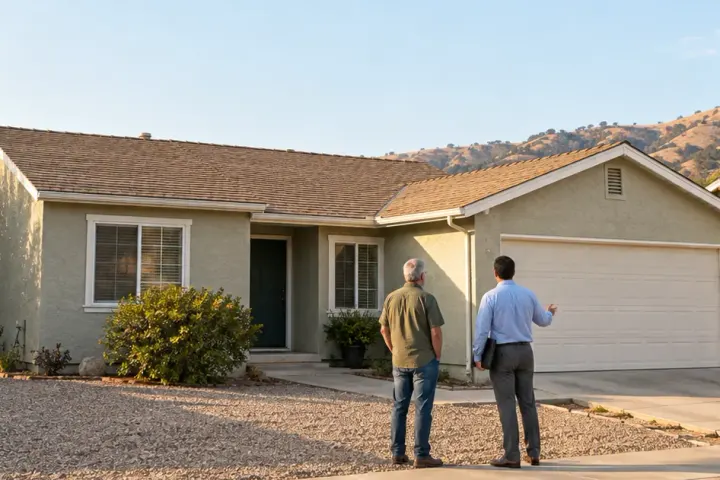
An inspector looks at the house in the first weeks of the policy, sometimes only from the street. Progressive's guide to its own inspections says a visit can be a drive-by of the exterior or an in-person visit, "within a few weeks after your policy begins." Some insurers look from the air as well. In March 2025, the California Department of Insurance said it had investigated complaints in which "insurers used imprecise drone or satellite photos to assess roof conditions."
The timing matters because of a 60-day window. The Department of Insurance says "the insurer has sixty days from the policy's effective date in which to verify the rating and underwriting of a new policy." After 60 days, Insurance Code section 676 lets the insurer cancel only for reasons the law lists.
Each insurer writes its own rules, so one company may flag a house that another one takes. In its 2004 study, the Department wrote that a house with a common refusal factor "may seem like an uninsurable house." The study said a house like that "just means more work," because the owner has to find a company that doesn't use the factor.
The 11 things, from the roof to the steps
We put these in the order you'd walk the house, from the top down and then out to the yard. The order isn't a ranking of how much each one matters.
- The size and build of the house.
- The roof's condition.
- Leaves and needles on the roof and in the gutters.
- Branches over the roof and near the chimney.
- Brush and dry plants close to the house.
- Peeling paint, rot and other signs of wear.
- Signs that nobody lives there.
- A pool without a barrier.
- A dog in the yard.
- Cracked steps and walkways.
- The electrical panel and wiring you can see.
1. The size and build of the house
An inspector can check that the house matches your application. California's rule for replacement cost estimates, in title 10 of the state's regulations, section 2695.183, lists what an estimate has to consider. That list includes the foundation, the frame, the roof type, the square footage of the living space and the year the house was built.
If the facts on file are wrong, your estimate of what it costs to rebuild can be wrong too. Progressive's guide says a rate can go up when the inspection finds different home characteristics or a higher replacement value.
Before the visit: pull out your application and check the square footage, year built, roof type and number of stories against the house. Under the same regulation, you're owed a copy of the replacement cost estimate and of any revised one. Our list of the 7 application details that trip up a quote goes through the answers to check.
2. The roof's condition
The roof gets looked at from the street, up close or from the air. United Policyholders, a California consumer nonprofit, lists "aging roofs" among the things insurers look for.
Before the visit: look at the roof from the ground and from an upstairs window. Have a roofer fix missing or broken sections. Keep the invoice. If the roof is old, get a roofer's written report on its age and the years of life it has left.
That report matters more after January 1, 2028, under SB 1301, a 2026 law. An insurer then can't refuse to issue or renew a policy "solely on the basis of the age of the roof." That protection applies when an inspector you hire and pay for "confirms at least five years of useful roof life remaining."
3. Leaves and needles on the roof and in the gutters
A roof covered in debris is easy to spot from the street or from above. In the state responsibility area, keeping it clear is also the law. Public Resources Code section 4291 says to keep the roof "free of leaves, needles, or other vegetative materials."
Before the visit: clear the roof and gutters, or pay someone to do it. Take dated photos when you're done.
4. Branches over the roof and near the chimney
United Policyholders lists "overgrown trees" among the things insurers look for. In the state responsibility area, section 4291 also says to remove any part of a tree within 10 feet of a chimney or stovepipe outlet. It says plants over or next to the house have to be kept "free of dead or dying wood."
Before the visit: cut back dead branches and anything near the chimney. A big tree may need an arborist and a few weeks, so book it early and keep the quote as proof you've started.
5. Brush and dry plants close to the house
In the Department of Insurance's 2003 survey of 107 homeowners insurers, "proximity to brush areas" was the third most common reason for turning down an application. At least half the insurers used it.
Section 4291 sets the clearing distance at 100 feet in the state responsibility area, but not beyond your property line. An insurer can ask for more only if a fire expert designated by the state finds the extra clearing necessary. Even then it can't go past your property line unless state law allows it.
Before the visit: clear dead plants and brush near the house. United Policyholders says some fire departments will certify that your clearing is enough for an insurer, so ask your local fire agency whether yours does.
6. Peeling paint, rot and other signs of wear
"Signs of poor maintenance" was the second most common reason for turning down an application in the 2003 survey. Progressive's guide names water damage, structural cracks, rot or decay and insect or animal damage as red flags.
Wear matters after a loss too. The Department of Insurance lists "wear and tear or maintenance" and "neglect" among the perils a policy generally doesn't cover.
Before the visit: walk around the house with your phone. Look for peeling paint, soft or rotted wood, broken windows, loose siding and stains under the eaves. Fix what you can. Keep a list of the jobs you've booked.
7. Signs that nobody lives there
Vacant property was the most common reason insurers gave for turning down an application in the 2003 survey. It was also a common reason for both cancellations and non-renewals. The Department of Insurance lists "losses to house vacant for 60 days or more" among the losses a policy generally doesn't pay for.
California's standard fire policy, in Insurance Code section 2071, uses the same line of 60 consecutive days. Your own policy may word its vacancy rule differently, so read that clause.
Before the visit: if you haven't moved in yet, tell your insurer when you will. Keep the yard mowed and the mail collected, so the house looks lived in on the day someone drives by.
8. A pool without a barrier
The Insurance Information Institute is an industry group. It says the insurance industry considers a pool an "attractive nuisance" because it raises your liability risk. The institute suggests a fence with self-closing gates on all sides, alarms on doors that open to the pool and a safety cover.
California sets its own floor when you get a permit to build or remodel a pool at a single-family home. Health and Safety Code section 115922 then requires at least 2 of 7 drowning prevention features.
Before the visit: check that the gate closes and latches by itself. Fix any gap in the fence and put the cover on.
9. A dog in the yard
"Presence of specified dogs" was among the reasons at least half the insurers used to turn down an application in the 2003 survey. The same study found that dogs were an issue at only 6 of the largest 13 insurers. Each insurer decides which dogs it lists.
Before the visit: make sure your application answered the dog question accurately. Under Insurance Code section 676, a material misrepresentation in getting the policy is one of the reasons the law allows for a cancellation. An inspector who walks the yard may see what the application left out.
10. Cracked steps and walkways
Progressive's guide says "cracked steps or walkways could increase the chance of an injury on your property." A guest who gets hurt on your property can bring a liability claim against your policy.
Before the visit: fix broken or uneven steps and lifted sections of the walkway. Tighten any loose handrail.
11. The electrical panel and wiring you can see
Old wiring makes a house harder to insure. The Insurance Information Institute says an old plumbing, electrical or heating system means "a higher chance of causing fire or water damage." Since January 1, 2026, California's seller notice under Civil Code section 1102.6i has said that faulty wiring "may make it difficult to obtain property insurance."
Before the visit: if your panel is on an outside wall, make sure its cover is on and closes. Have an electrician fix any wiring that hangs loose outside. If the panel is old, get a licensed electrician's written report before you pay for a replacement. Handyman vs licensed contractor explains which of these jobs need a license.
What if the inspector comes inside?
Some inspections include the inside of the house. Progressive's guide says an interior visit also checks smoke alarms, fire extinguishers and anti-theft devices. California law requires 3 things an inspector would look for there:
- Smoke alarms approved by the State Fire Marshal, installed the way the manufacturer says, under Health and Safety Code section 13113.7.
- A carbon monoxide alarm in any house with a gas or other fossil fuel heater or appliance, a fireplace or an attached garage, under section 17926.
- A water heater that's "braced, anchored, or strapped" against earthquakes, under section 19211.
California smoke and carbon monoxide alarm rules and how to strap a water heater have the steps. Plumbing comes up too, so know where your main water shutoff is and fix any drip you can see.
What happens if the inspector flags something?
Often you get a list and a deadline. Progressive's guide says an insurer "will often allow you to fix the outstanding problems within a specified period." It says the insurer may cancel if you don't show the fixes in time. How to clear an insurer's repair list walks through that letter step by step.
If the insurer cancels after the first 60 days, the law sets the terms:
- The reason has to be one that Insurance Code section 676 allows. That list includes physical changes that make the property uninsurable and grossly negligent acts that substantially raise the risk.
- The notice has to name the reason and the specific facts behind it, under section 677. It also has to tell you that the Department of Insurance can review a cancellation you think was wrong.
- The notice has to reach you at least 20 days ahead, or 10 days for nonpayment or fraud, under section 677.4.
If the insurer non-renews instead, section 678 requires the notice at least 75 days before the policy ends, with "the specific reason or reasons." Under section 791.10, you can ask in writing for the specific information behind the decision within 90 business days of the notice. The insurer then has 21 business days to answer.
More rights start on January 1, 2028, under SB 1301. On request, the insurer then has to send any inspection findings or reports it relied on within 15 days. If you dispute the condition of the house, you can ask for an onsite inspection.
If a demand seems unreasonable, push back in writing first. United Policyholders' example is an insurer asking an owner to repave a driveway that's old but still in good condition. It suggests asking your agent or broker for help. It also says you can complain to the Department of Insurance.
If the flag costs you the policy
A cancellation or non-renewal after an inspection means one insurer's rules were applied to your house. That's the "more work" the Department's 2004 study described, because the next step is a company that doesn't use the same factor.
Casa quotes California homes that another insurer has turned down, standard insurers first and then specialty insurers if needed. Bring the inspector's findings and your dated photos of each fix to the next application. If the roof was the flag, the guide to how insurers judge an older roof from Casa, whose team runs this site, explains that state law doesn't set an age limit. Each insurer writes its own.
Questions people ask
When does the inspection happen after I buy a policy?
It usually happens within the first few weeks, according to Progressive's guide to its own inspections. The Department of Insurance says the insurer has 60 days from the start date to verify a new policy's rating and underwriting.
Do I have to be home for the inspection?
You don't need to be home for an exterior inspection, which can be a drive-by or a walk around the outside. An interior inspection needs someone to let the inspector in, so it has to be scheduled with you. Can you refuse a home insurance inspection? covers what happens if you say no.
Can I ask for my own inspection?
Yes. The Department of Insurance suggests it in one case. If you think your coverage limits are too low, it says to "request a comprehensive inspection of your home" from your agent, broker or insurer.
Sources
- Residential Insurance: Homeowners and Renters (California Department of Insurance)
- Commissioner Lara supports legislation to protect homeowners' privacy and increase transparency in insurers' use of aerial imagery, March 28, 2025 (California Department of Insurance)
- Underwriting Guidelines and Access to Homeowners Insurance, 2004 (California Department of Insurance)
- Home Insurance Inspection: What to Expect, updated December 21, 2023 (Progressive)
- ALERT: "Fire-Safe" Inspections and Repair Requirements by Insurers (United Policyholders)
- California Code of Regulations, title 10, section 2695.183 (Legal Information Institute)
- California Public Resources Code section 4291 (FindLaw)
- California Insurance Code section 2071 (FindLaw)
- Pool safety and insurance (Insurance Information Institute)
- California Health and Safety Code section 115922 (FindLaw)
- What if I can't get coverage? (Insurance Information Institute)
- California Civil Code section 1102.6i (FindLaw)
- California Health and Safety Code section 13113.7 (FindLaw)
- California Health and Safety Code section 17926 (FindLaw)
- California Health and Safety Code section 19211 (FindLaw)
- California Insurance Code section 676 (FindLaw)
- California Insurance Code section 677 (FindLaw)
- California Insurance Code section 677.4 (FindLaw)
- California Insurance Code section 678 (FindLaw)
- California Insurance Code section 791.10 (FindLaw)
- SB 1301, Chapter 693, Statutes of 2026 (CalMatters Digital Democracy)